Can 'love languages' really improve your relationship?
10 June 2026
I used to be a bit negative towards the idea of ‘love languages’, seeing it as a bit ‘American’ and overly romantic. But I’ve come round to the theory and see it as a potentially usefuul way of improving a relationship.
First, what exactly are ‘love languages’? The idea was developed by therapist Gary Chapman in the 1990s and described in his book The Five Love Languages.
The idea is that there are certain behaviours that make someone feel loved or cared for but that these behaviour vary from person to person.
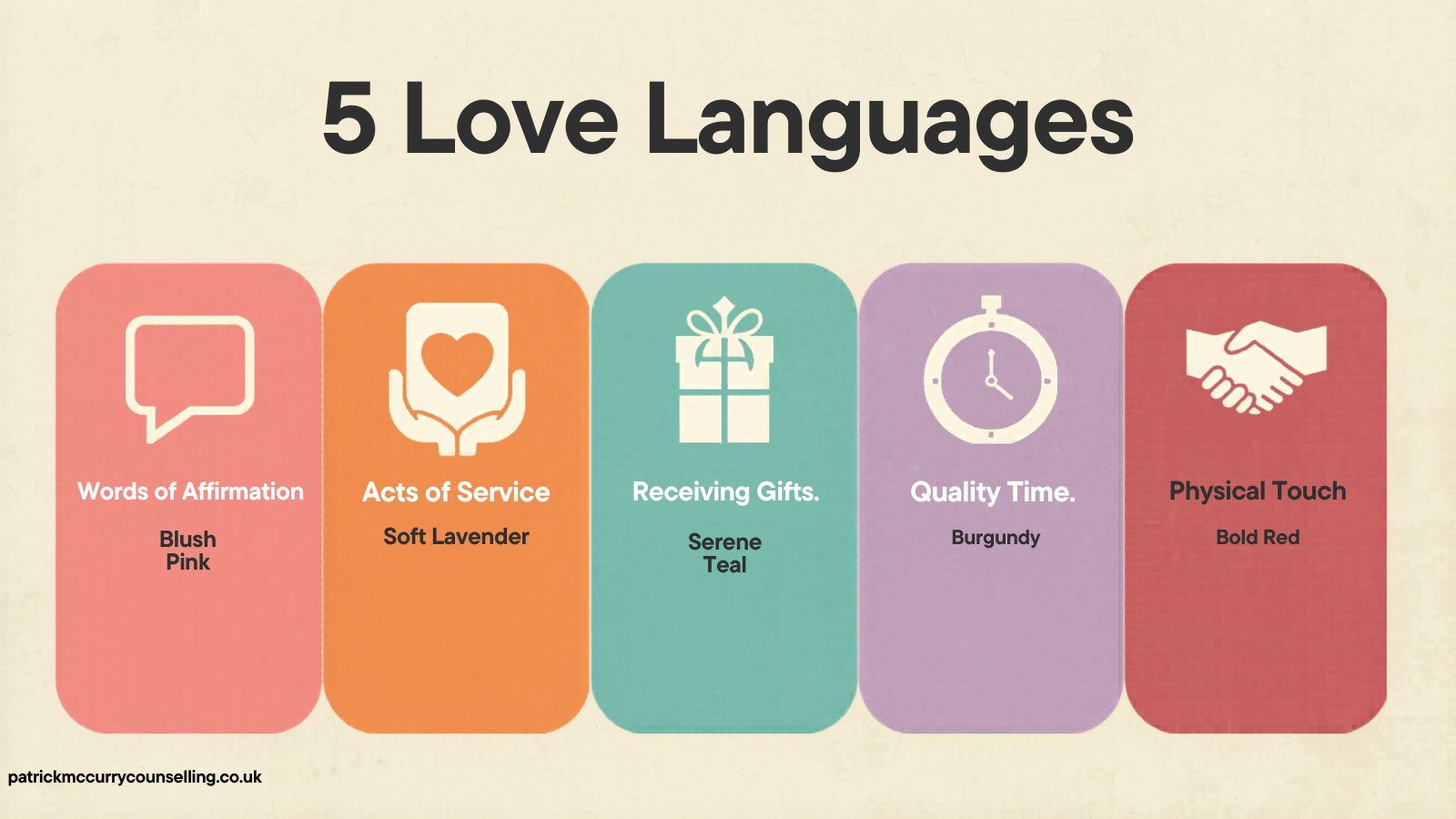
The five love languages that Chapman described are:
- words of affirmation - verbal complliments or words of appreciation
- quality time - giving your partner your full attention, such as going for a walk together and talking, or going for a meal.
- receiving gifts - it doesn’t have to be expensive, it can even be something that you’ve made and that doesn’t have any financial value
- acts of service - doing things you know your partner would like you to do. This could include cooking a meal, cleaning the bathroom, going to the supermarket for groceries etc.
- physical touch - this may include holding hands, hugging, sex or curling up on the sofa together
You can find out what your love language is by doing a questionnaire at the back of Chapman’s book. There is one for men and one for women. There are also versions on the internet that you can find. What tends to happen, after you score the exercise, is that you discover that you have one or two ‘primary’ love languages. It’s not that the other love languages are unimportant to you, just that they do not give you that feeling of being loved that the primary languages do.
Partners will have different love languages
An important thing to remember, and it may seem very obvious to many of you, is that your main love languages will likely to be different to those of your partner. It can be easy to assume that, just because we really value physical tough or words of affirmation, that our partner should also value them in the same way.
In that sense an appreciation of love languages can help us become more empathetic towards our partner. Just really acknowledging how different they are in their preferences is an important recognition. After all, for all of us it is tempting to take our own experience and project it onto the outside world and assume everyone must see things the way we do.
Practical
For me one of the interesting elements of doing this process was that it gave me a practical guide to how my partner thinks and what she really appreciates. It is not something vague like ‘be nice’ or ‘be loving’ but specific behaviour that will make a difference.
I was talking to a male client about this and they said that they were particularly struck by ‘receiving gifts’ as a love language. This was not something that was very meaningful for him, personally, but learning that it was one of his partner’s love languages has been impactful. H said that it had opened up a whole new realm. Previously he had been rather dismissive about the importance of gifts or presents but now he takes particular enjoyment in looking for things that he thinks his partner will appreciate.
While love languages in themselves may not transform a relationship by themselves, they can provide a boost when things are not going well and can help create a more positive atmosphere so that deeper change can be explored.